
From rising prescriptions to the pharma sales force back on the field with full vigour and companies finally finding their feet with the digital marketing strategies - Indian drug makers have shown that medicine sales is certainly a sunshine sector.

Trade generic drugs (medicines that are sold directly through distributors) are fast becoming a key segment for domestic pharma firms as volume growth slows in the overall market. Big companies like Cipla and Alkem have a significant presence in the segment but recently, players like Torrent Pharmaceuticals and Dr Reddy's Laboratories (DRL) have also entered this market. What is driving big pharma's focus on trade generics? The volume growth in the Indian Pharma Market (IPM) has come down from 5.6 per cent in FY16 to 0.1 per cent in FY23.

Indian drug firms continue to work closely with the FDA, and most have also appointed consultants to help them grasp the regulatory minutiae in the US.

Corporate houses like Tata Sons and Wipro have not only seen growth in India but have created a name in global markets too.
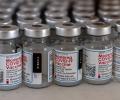
However, before the Moderna and Pfizer messenger ribonucleic acid (or mRNA) vaccines come to India via this route, the legalities around the indemnity clause will have to be settled, reports Sohini Das.

Sensex falls at close; metals, banks perform well.

The domestic benchmark indices - the S&P BSE Sensex and the National Stock Exchange Nifty50 - had lost close to 1.5 per cent in three days recently before gaining slightly. Notwithstanding weakness and volatility, the Nifty50 has managed to hold on to the 18,000 mark, while the Sensex has managed to stay above the 61,000 level. The performance of the stocks that comprise these front-line indices remains polarised.

India's largest listed pharmaceutical (pharma) company - Sun Pharmaceutical Industries (Sun Pharma) - is expected to maintain its outperformance vis--vis the sector's, as its multiple bets on specialty products, improving product mix, recent acquisitions, and branded business are finding favour with brokerages. While it has gained 7 per cent over the past year, the Nifty Pharma Index is down 13.6 per cent. Its outperformance over two years has been fairly evident, with the market leader gaining 66 per cent to Nifty Pharma's minus 1.4 per cent.

Global markets trends, inflation, release of industrial output data and quarterly earnings will dictate movement of the equity benchmarks this week, analysts said, adding that volatility might continue amid slew of announcements of macroeconomic data at the global level too. Moreover, foreign fund movement, crude oil prices and trend in rupee would also act as major drivers for the equity market, they added. "The direction of global equity markets along with movement in dollar index and crude oil prices will continue to dominate while inflation numbers of the USA on May 11 and inflation and IIP numbers of India on May 12 will also cause volatility in the market," said Santosh Meena, head of research, Swastika Investmart Ltd.

Drug firm MSD has decided to enter into voluntary licensing agreements for investigational oral antiviral drug candidate 'Mmolnupiravir', which is being studied for the treatment of Covid-19, with Indian drug firms Sun Pharma, Cipla, Dr Reddy's, Emcure Pharma and Hetero Labs, its Indian arm said on Tuesday.
Reinvent and innovate will be the key mantra for the Indian pharma industry in the New Year as the 'pharmacy of the world' looks to move from volume to value leadership, amid emerging challenges of inflation and pricing pressures in the global markets. While R&D investment, market competitiveness, regulatory scrutiny, and domestic price regulations are expected to shape the growth of generics and injectable products, concerns such as price control and customs duties on medical equipment will continue to bother the healthcare industry in 2023. The industry believes that in view of India's G20 Presidency, digital health innovation, achieving universal health coverage, improving healthcare infrastructure and delivery will continue to be the key driving factors in 2023.

The S&P BSE Sensex dropped 207 points to end at 25,230.

Fabiflu sales have grown by 62 per cent in July. It was launched in June. This drug is being used by doctors for mild-to-moderate Covid patients even if they are in home isolation.

The BSE Midcap and Smallcap indices underperformed the largecaps and ended over 1% lower.
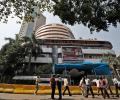
Of the 30-share Sensex pack, 15 today closed in the red
Currently, the country is using two 'made-in India' jabs -- Covishield and Covaxin -- to inoculate its billion-plus population and has administered 20 crore doses since launching the world's largest vaccination drive in mid-January. A third vaccine, Russian-made Sputnik V, has been approved by the government and is being used on a smaller scale at present.

The Hyderabad-based firm will first make the drug available in high case load areas of Maharashtra and Delhi under the brand Covifor. A single dose vial is likely to cost Rs 5,000-6000.

Infosys was the top Sensex loser along with other index heavyweights ITC and HDFC.

Banks stocks continued to trade weak along with FMCG major ITC.

Reliance Industries Ltd, the country's largest company by revenues, profits and market value, has topped Indian corporate in the World's Best Employers rankings 2021 published by Forbes. Reliance was placed at 52 in the overall ranking of 750 global corporates likes Phillips, Sanofi, Pfizer and Intel. Other Indian names in the top 100 rankings were ICICI Bank at 65, HDFC Bank at 77 and HCL Technologies at 90, according to the Forbes ranking.

The FPI holding in India's top 100 companies, which are part of the Nifty 100 index, declined to 24.23 per cent on average at the end of March this year, from a high of 27.5 per cent at the end of March 2021. This is the lowest FPI holdings in India's top listed companies in at least three years. A general sell-off by FPIs has weighed on stock prices and the benchmark S&P BSE Sensex is down 8.5 per cent, from its 52-week high made in October 2021. Most analysts expect FPI flows to remain weak in FY23 as well, given rising bond yields in the US and an expected earnings slowdown in India due to high inflation and commodity prices.

'Enterprises have become more demanding in terms of their productivity expectation from their employees.'

Equity markets will look for directions from global trends, ongoing quarterly earnings and investment patterns of foreign institutional investors (FIIs) in a holiday-shortened week ahead and may encounter volatility amid the scheduled monthly derivatives expiry, according to analysts. Equity markets will remain closed on Wednesday on account of 'Republic Day'. "This week is a holiday-shortened one and it's going to be critical due to the list of events and data that are lined up.

After a volatile session, Sensex closed the day 563 points lower

OIL, IOC, HPCL, BPCL slipped between 0.1-1.5% each while the oil producing companies such as ONGC (0.1%), RIL (1.5%), GAIL(2.6%) also edged lower.

Stock markets are expected to remain under pressure this week due to the overhang of US presidential polls and uncertainty over global growth due to resurging cases of coronavirus, according to analysts.
Indian drug firms get a shot in the arm in the $12 bn Australian drug market as the Therapeutic Goods Administration (TGA), Australia agrees to accelerate the drug approval process in that country for Indian players who already have an approved plant and product from one of the stringent regulatory authorities like US, EU or Canada. From current sales of $340 mn, the Indian firms can see a significant upside in sales; felt Dinesh Dua, former chairman of the Pharmaceutical Exports Promotion Council of India (Pharmexcil), and the MD of Nectar Lifesciences. He highlighted that only 12 percent of the Australian drug market is generic, as against 80-90 per cent in the US or EU. Of this $1.5 bn generic drug market in India, Indian companies have a small share.

While companies continue to face regulatory pressure leading to higher costs, they see an uptick from the launch of differentiated and high-margin products
With all major US export-oriented drug manufacturing plants in the country up for inspection in 2022, some estimates peg that at least 20-30 per cent of the new product launches lined up for the US will be subject to on-site inspection by the US Food and Drug Administration (USFDA). The last two years saw limited physical inspections due to travel restrictions during the pandemic. "Pre-Covid, the frequency and number of inspections of manufacturing plants in India by USFDA had increased significantly," analysts from ICICI Securities Research noted. "With growing ANDA filings, especially for complex products. "We expect this trend to return with the environment normalising," analysts from ICICI Securities Research noted.

The Union health ministry on Friday said license has been given to five more manufacturers for production of Amphotericin-B, used in the treatment of black fungus, and they will start producing 1,11,000 vials of the drug per month from July.
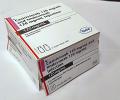
According to medical practitioners, the treatment is especially useful in controlling disease among those who have not received the vaccine or got only one shot and also the high-risk contacts of a patient.
They seek to profit from big-selling drugs going off-patent this year in the lucrative market.

Markets

Reliance Industries rose by 1.16 per cent while ITC and ICICI Bank zoomed up to 2 per cent, lifting the indices to all time high levels.
Yusuf Hamied, Anji Reddy and Parvinder Singh are the real pioneers of the Indian pharmaceutical industry.

The 30-share Sensex ended down 414 points at 25,481 and the 50-share Nifty slipped 119 points at 7,603.
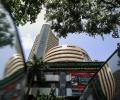
The S&P BSE 500 index, which accounts for 94% market capitalisation of BSE listed companies, has gained 45% from its March 24 low. However, out of the BSE 500 index stocks, 225 have underperformed the index by gaining less than the broader index during this period.

The broader Nifty closed higher by 7.30 points

India has capped the prices of 36 drugs, including those used to treat infections and diabetes, in its latest move to make essential medicines more affordable, a senior official of the country's drug pricing authority told Reuters on Friday.

'The vaccine policy should be such that all people should get the vaccine free.'
 © 2026 Rediff.com - Advertise with us - Disclaimer - Privacy Policy - Sitemap - Feedback - About us - Terms of use - Grievances